



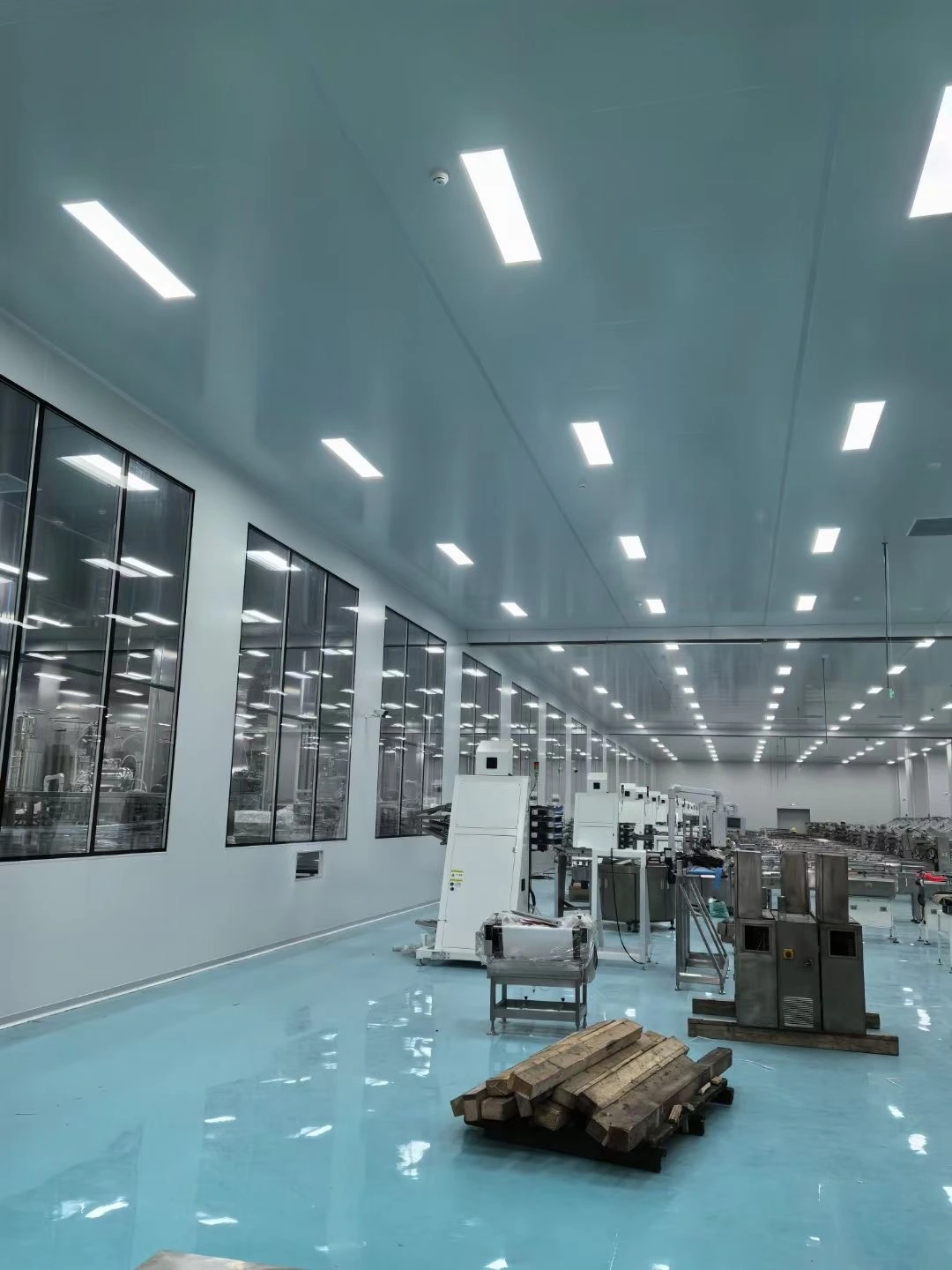
SC Food Aseptic Workshop Design
SC food workshop design comprises two main components: process design and non-process design.
Process design refers to designing the food workshop according to technological requirements, with process design being the primary focus. It also provides various data and requirements to other design departments, serving as the basis for non-process design.
Food Workshop Process Design:
●The content of food workshop process design generally includes: overall plant process layout; determination of product plans and shift output; determination of production processes for main products and recycled products; material calculations; calculation and selection of equipment production capacity and equipment list; workshop layout; labor calculation and balance; estimation of water, electricity, steam, cooling, ventilation, and heating consumption; pipeline layout, installation, and material list; construction instructions, etc.
In addition to the above, food factory process design must also specify the process requirements for relative positions in the overall layout; requirements for workshop buildings, lighting, ventilation, and sanitation facilities; requirements for water, electricity, steam, cooling, and energy consumption in the production workshop; calculation of warehouse area and special requirements for warehouse temperature and humidity, etc.
Non-process design of food workshops
●Non-process design of food factories includes: site layout, civil engineering, heating and ventilation, water supply and drainage, power supply and automation, refrigeration, power, environmental protection, and sometimes equipment design. Non-process design is based on the requirements and data provided by the process design. The relationship between process design and non-process design in food factories is as follows: the process provides process requirements to the construction department, and the construction department provides the process with buildings that meet those requirements; the process provides process requirements and relevant data to water supply and drainage, electricity, steam, cooling, heating, and ventilation, while water, electricity, and steam provide the process with relevant workshop installation drawings; civil engineering provides relevant building information to water supply and drainage, electricity, steam, cooling, heating, and ventilation, while water supply and drainage, electricity, and steam provide relevant information on building layout; various electrical engineering disciplines, such as process, cooling, ventilation, steam, and heating, provide electricity usage data to the power supply department; and various water engineering disciplines, such as process, cooling, ventilation, steam, and fire protection, provide water usage data to the water supply and drainage departments. Because the entire design involves many different trades and is quite complex, good cooperation between these trades is key to a successful food processing plant design.
FAQS