



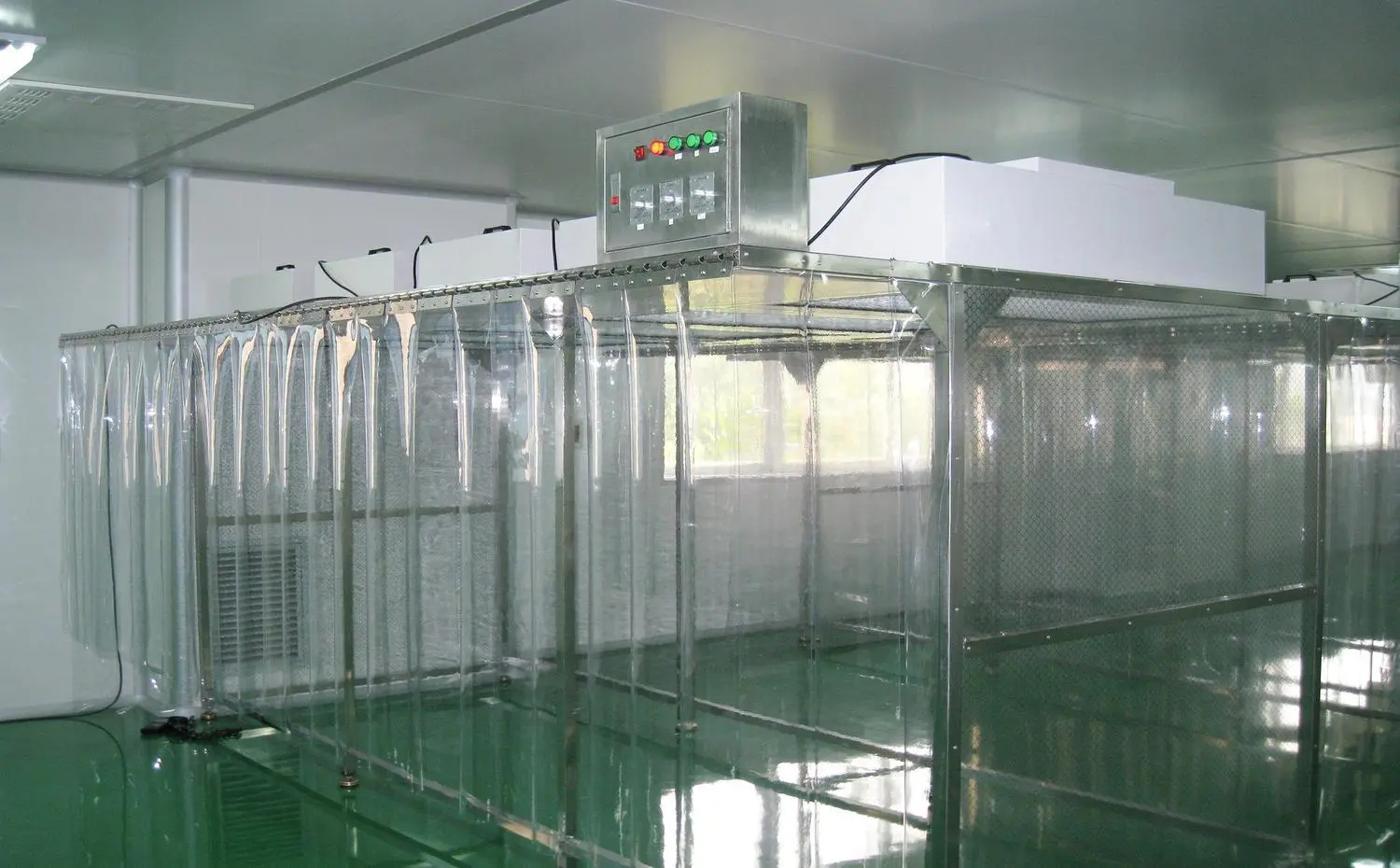
Cleanroom for Microbial Testing
Core Design Parameters
1. Cleanliness Standards
The core operating area (within 0.5m above the workbench) meets ISO Class 5 standards, with ≤3520 particles ≥0.5μm per cubic meter, settling bacteria ≤1 CFU/plate (φ90mm, 4h), and airborne bacteria ≤5 CFU/m³. The surrounding area is compatible with the existing ISO Class 8 laboratory environment, and cross-contamination is avoided through differential pressure control.
2. Airflow Organization
A vertical unidirectional flow design is adopted, with the top fully equipped with FFUs (fan filter units, H14 grade high-efficiency filters). The airflow velocity is stabilized at 0.45±0.1m/s, forming a "top-supply, bottom-return" clean airflow barrier, effectively isolating external microorganisms and particulate matter from entering the operating area.
3. Environmental Control
● Temperature: 22±2℃, Humidity: 45±5% RH, suitable for the temperature-sensitive requirements of microbial culture;
● Pressure Difference: Pressure difference between the inside of the clean booth and the outside laboratory ≥10Pa, to prevent backflow of contaminated air from the outside;
● Illumination: Illumination in the operating area ≥300lx, meeting the needs of delicate operations such as microscopic observation and colony counting.
Modular Structure Features
1. Rapid Deployment and Flexible Adaptation
Utilizing an aluminum alloy frame combined with anti-static PVC curtains/color steel panels, prefabricated components are manufactured in the factory. On-site assembly takes only 1-3 days and can be directly placed in existing laboratories or testing workshops without large-scale civil engineering modifications. Customizable dimensions (e.g., 1.2m×1.5m, 2m×2m, etc.) adapt to different testing table sizes.
2. Safe and Compliant Materials
● Frame: Lightweight aluminum alloy, corrosion-resistant, easy to clean, and resistant to wiping with alcohol and chlorine-containing disinfectants;
● Enclosure Structure: Transparent anti-static PVC curtains (allowing visibility of the operation process) or antibacterial color steel panels (for enhanced sealing), eliminating the risk of particle shedding;
● Worktable: 304 stainless steel, seamless, acid and alkali resistant, and capable of high-temperature sterilization, meeting the aseptic operation requirements for microbiological testing.
3. Convenient operation and maintenance, low cost
● The FFU fan adopts frequency conversion control, which can adjust the air speed according to the cleanliness requirements, reducing energy consumption;
● The high-efficiency filter replacement cycle is 6-12 months, and the entire frame does not need to be disassembled for replacement, making maintenance simple;
● The movable design (with casters at the bottom) facilitates the adjustment of the laboratory area functions.
Typical Application Scenarios
●Pharmaceutical Microbiology Testing: Sterility testing, microbial limit testing, and bacterial endotoxin detection of sterile drugs;
●Food Quality Inspection: Total bacterial count, isolation, culture, and identification of pathogenic bacteria (such as Salmonella and Escherichia coli) in food;
●Biomedical Research and Development: Cell line screening, strain activation, and aseptic preparation of vaccine samples.
Product Specification
| Speed (m/s) |
0.45m/s ±20% |
| Temperature(optional) | 18-28°C |
| Humidity(opiional) | 45-65% |
| Illumination | 300-1000LUX |
| Ceiling Material | Sandwich color steel plate |
| HEPA Filter | 99.99%@0.3um |
| Voltage | 220V Electrical Equipment, 380 V |
| frame | Steel cube with baked enamel |
| Certification | Rohs EMC |
| After Warranty Service | Video technical support/Online support |
Commonly used equipment in cleanrooms