



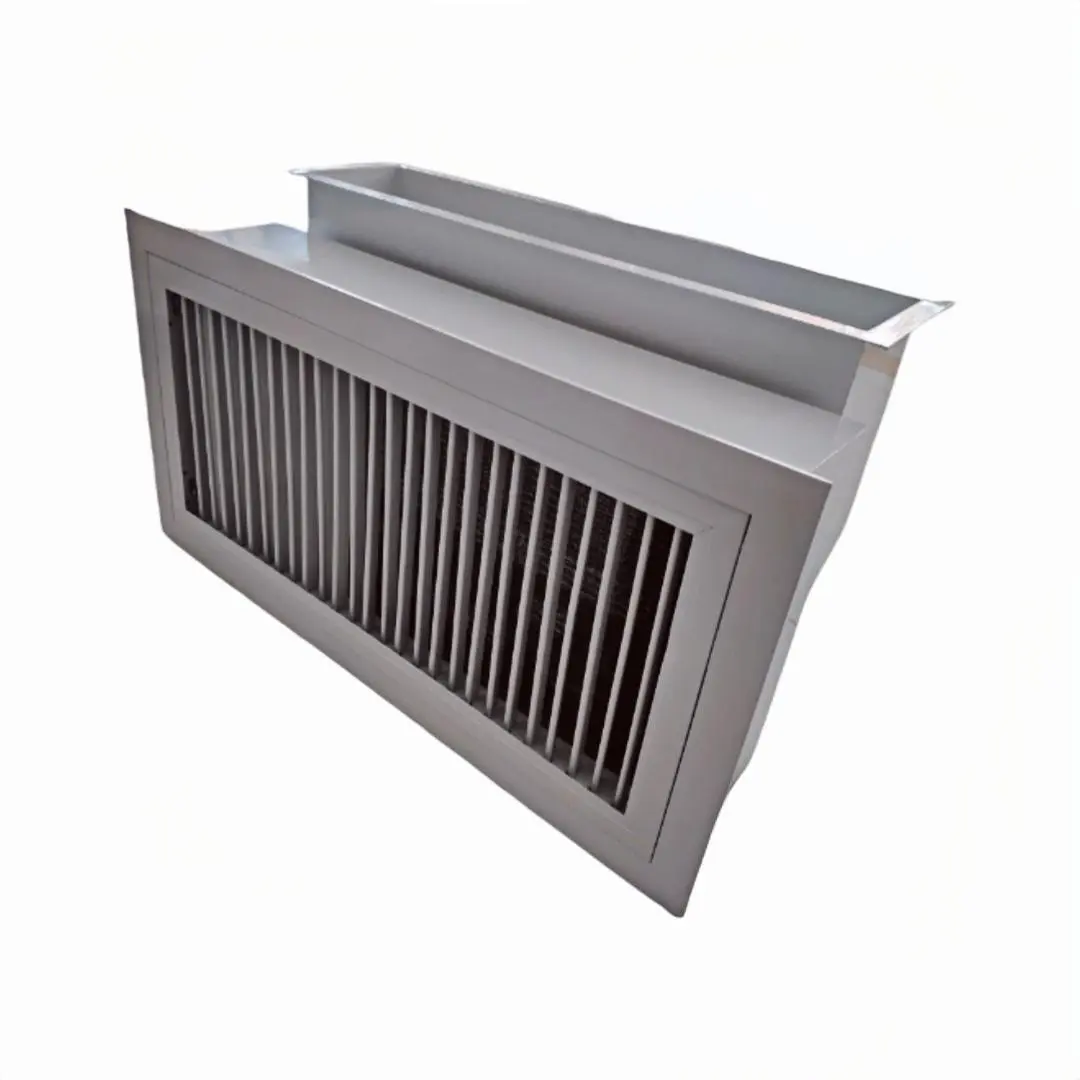
Floor-Mounted Return Air Grille: Core of OT Clean Air Circulation
| The box body is 1.2mm cold-rolled plate with paint, aluminum alloy paint vertical shutters, including medium-efficiency filter. Duct interface size: W320*H200 |
| 900*350*410 |
Routine Maintenance Points:
●Clean/replace filters regularly to prevent blockages that could obstruct return air and affect airflow circulation;
●Disinfect the return air panel surface daily to prevent microbial adhesion;
●Regularly inspect the static pressure chamber and duct interior, cleaning away accumulated dust to ensure system operating efficiency.
Structural and Design Considerations
●Basic Structure
Mainly composed of return air panels, filters, static pressure chambers, and connecting ducts.
1. Return Air Panel: Primarily made of stainless steel, corrosion-resistant and easy to disinfect. The opening ratio is calculated to ensure low air resistance and block large particles.
2. Filter: Equipped with pre- or medium-efficiency filters to intercept dust, hair, and other impurities, protecting the downstream air conditioning unit.
3. Static Pressure Chamber: Balances return airflow, preventing excessively high local airflow velocities that could cause noise or airflow turbulence.
●Layout Principles
Typically arranged corresponding to the supply air areas of the laminar flow ceiling, for example, return air vents are placed on both sides of the operating table or at the bottom of the bed to ensure the airflow path covers the entire surgical area.
The number and size of the return air vents need to be calculated based on the operating room area and supply air volume to ensure that the return air rate matches the supply air rate and avoid airflow short-circuiting.
●Material Requirements: Medical-grade stainless steel (such as 304/316 stainless steel) must be used to meet the high-frequency disinfection requirements of the operating room (such as alcohol wiping and high-temperature sterilization), and the surface must be smooth and without dead corners to prevent dust accumulation and bacterial growth.
Core Functions:
● Closed-Loop Airflow Circulation: Receives clean air supplied by the laminar flow ceiling and rapidly exhausts air carrying dust, droplets, and waste gases generated during surgery, forming a directional airflow circulation of "upward supply and downward return," preventing pollutants from spreading and lingering indoors.
●Maintaining Cleanliness Gradient: Through bottom return air, it ensures that the surgical area (especially around the operating table) is always at the highest cleanliness level. Pollutants are carried directly down by the airflow to the return air vent for discharge, reducing the risk of contamination to surgical wounds.
●Balancing Indoor Air Pressure: In conjunction with the air supply system, it regulates the pressure difference between the operating room and adjacent areas (operating rooms are typically under positive pressure), preventing the infiltration of unpurified external air and maintaining a stable clean indoor environment.