



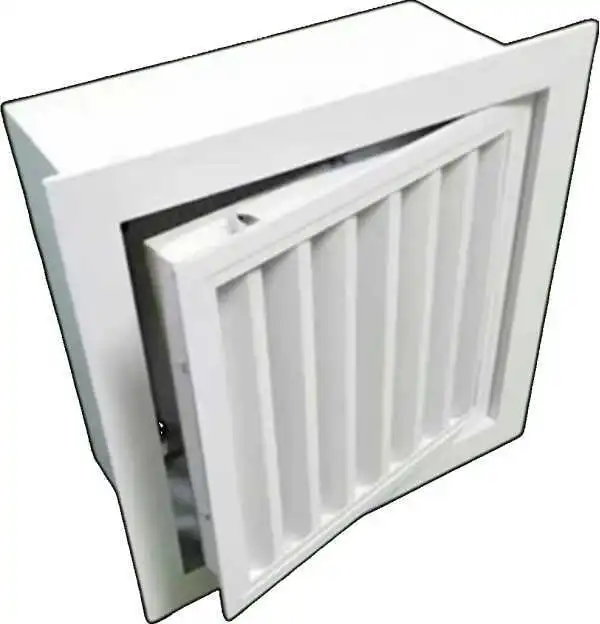
Exhaust louver (top): Precise pressure control, preventing external pollution from entering.
core function of Airlock interlock
●Targeted Exhaust, Precise Contamination Control
Installed above the non-surgical area of the operating room ceiling, it works in conjunction with the overhead air supply to create laminar airflow, quickly removing contaminants generated in the surgical area, preventing the spread of germs, and ensuring a clean surgical field.
Positive Pressure Maintenance, Contamination Isolation
By precisely adjusting the exhaust volume and linking it with the air supply system, a positive pressure environment is maintained in the operating room relative to the surrounding area, effectively preventing the infiltration of contaminated air from external corridors and auxiliary rooms.
Medical-Grade Materials, Safe and Easy to Maintain
The stainless steel body is resistant to disinfectant corrosion and can withstand high-temperature and high-pressure sterilization; the air vent panel is easy to disassemble, and daily cleaning and filter replacement do not require professional tools, reducing maintenance costs.
Low-Noise Operation, Suitable for Surgical Scenarios
Optimized air duct structure and valve design result in operating noise levels as low as 40dB, avoiding interference with surgical procedures and communication with medical staff.
Core advantages
●Exhaust Box: Constructed of 304 stainless steel, corrosion-resistant, easy to clean, and dust-free, meeting medical industry hygiene standards; the box is seamlessly welded and sealed to prevent air leakage and dust accumulation.
●Adjustable Air Outlet Panel: Equipped with a strip or louvered air guide panel, the angle is flexibly adjustable, precisely controlling the exhaust direction and preventing direct airflow onto the operating table; the panel surface is smooth and without dead corners, facilitating disinfection and wiping.
●Airflow Adjustment Device: Built-in butterfly valve or damper actuator supports manual or electric adjustment of the exhaust volume, precisely matching exhaust requirements according to surgical type (e.g., general surgery, orthopedics, ophthalmology).
●Protective Components: Optional pre-filter to intercept large particles and prevent dust backflow in the ductwork; some high-end models integrate a high-efficiency filter module to achieve harmless treatment of exhaust air.
●Working Principle: Utilizing the negative pressure suction of the air conditioning system, stale air from inside the operating room is drawn in through the top exhaust vents. An adjustable panel guides the airflow evenly into the exhaust duct. The airflow regulating valve adjusts its opening in real time based on indoor positive pressure monitoring data, ensuring a dynamic balance between exhaust and supply air volumes. An optional filter pre-treats the exhaust air before finally discharging the waste gas outdoors, achieving continuous air circulation and purification in the operating room.
●Applicable Scenarios: Widely used in clean operating rooms (Class I-III), negative pressure isolation operating rooms, interventional therapy rooms, and clean areas in delivery rooms, adapting to the airflow organization requirements of different levels of surgical environments.