



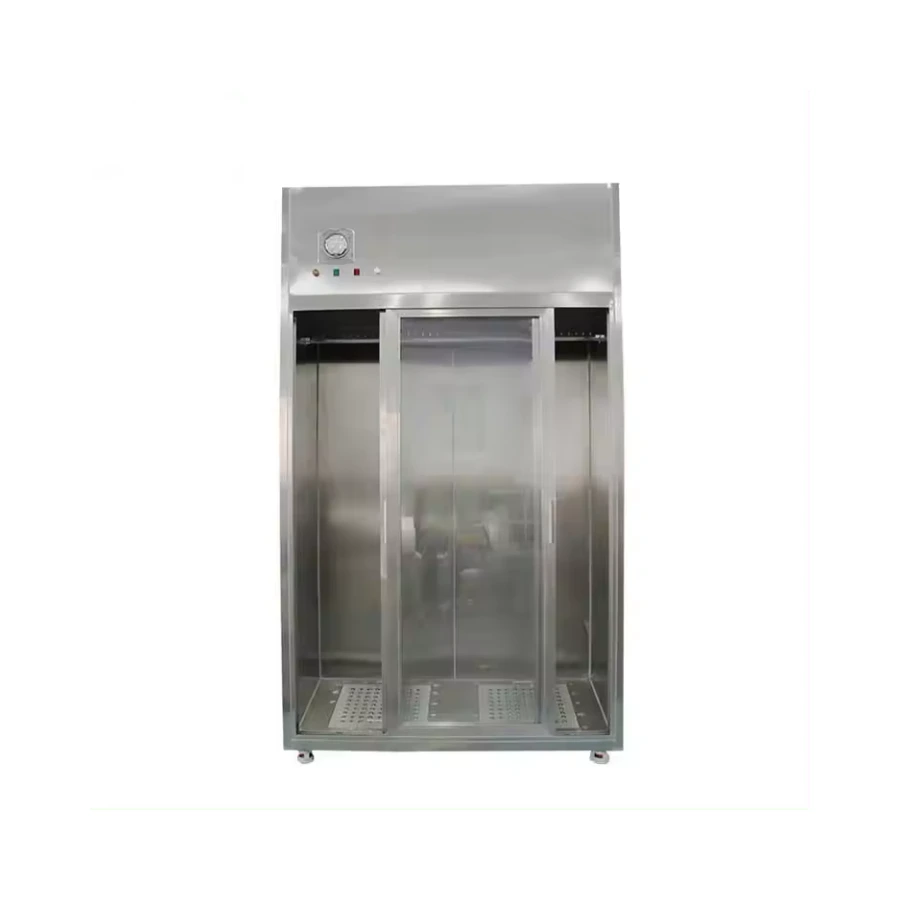
Stainless Steel Clean Wardrobe Clothes Cabinets
Core Functions
● Maintaining High Cleanliness:
Air entering the cabinet is filtered through a high-efficiency particulate air filter (such as a HEPA filter) to remove particles (such as dust and microorganisms), ensuring internal cleanliness meets standards (e.g., ISO 5 to ISO 8, corresponding to Class 100 to 100,000 cleanroom standards).
Some models are equipped with a UV germicidal lamp to further kill bacteria and viruses, meeting aseptic storage requirements.
●Corrosion and Chemical Resistance:
Made of 304 or 316 stainless steel, it is resistant to acids and alkalis and corrosion, suitable for storing environmentally sensitive items (such as chemical reagents and electronic components).
316 stainless steel contains molybdenum, providing stronger resistance to pitting corrosion, suitable for scenarios involving frequent contact with strong cleaning chemicals such as hydrogen peroxide.
●Easy Cleaning and No Dead Corners Design: The smooth stainless steel surface reduces dust adhesion and facilitates wiping and disinfection.
Internal structure (such as rounded corners and removable shelves) prevents dirt accumulation and reduces the risk of cross-contamination.
●Environmental Control:
Some models integrate temperature and humidity control functions to maintain a constant temperature and humidity environment, protecting delicate items (such as optical components and biological samples).
Nitrogen cabinet models reduce oxygen and humidity by filling with nitrogen, preventing oxidation or moisture absorption.